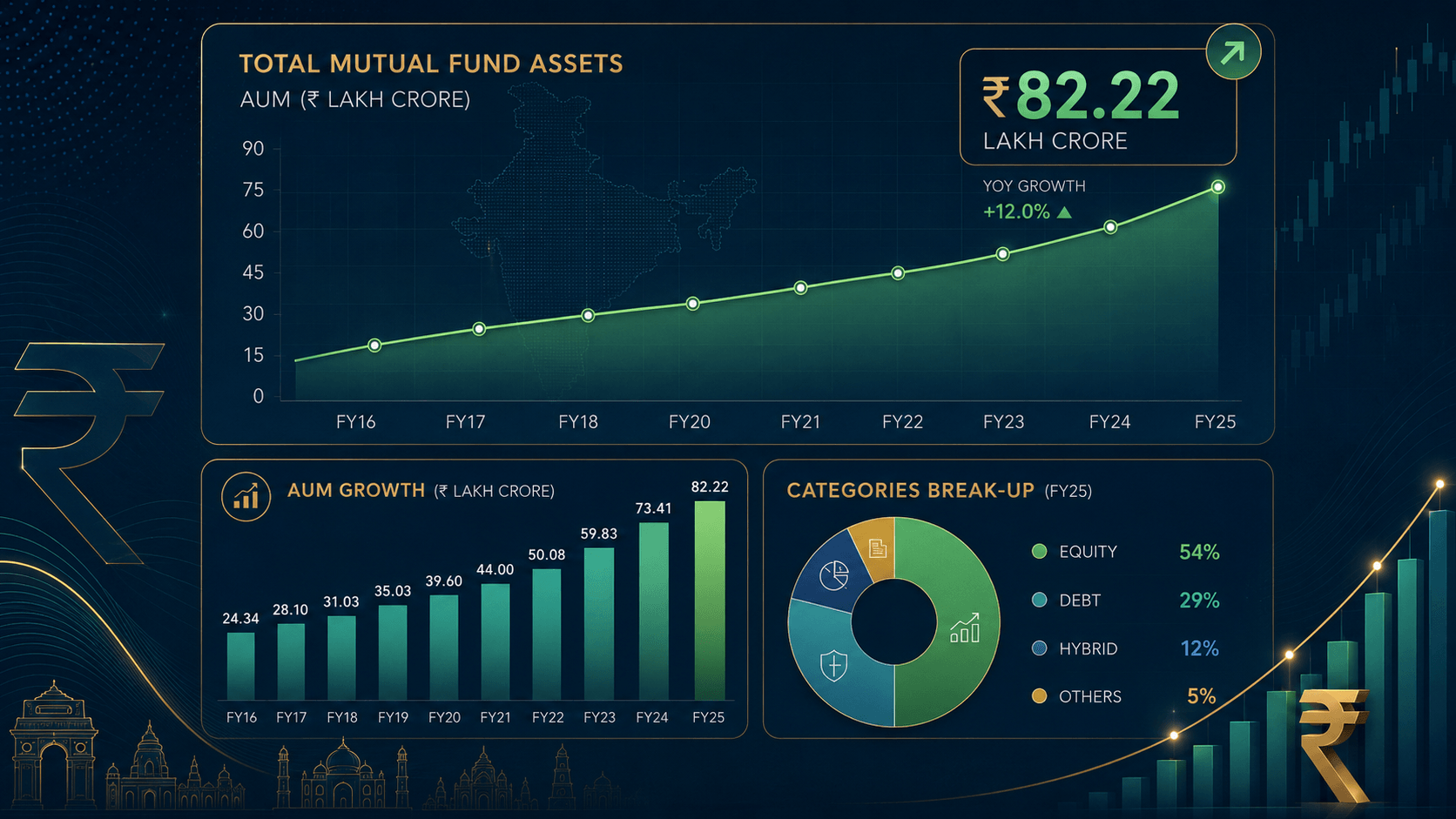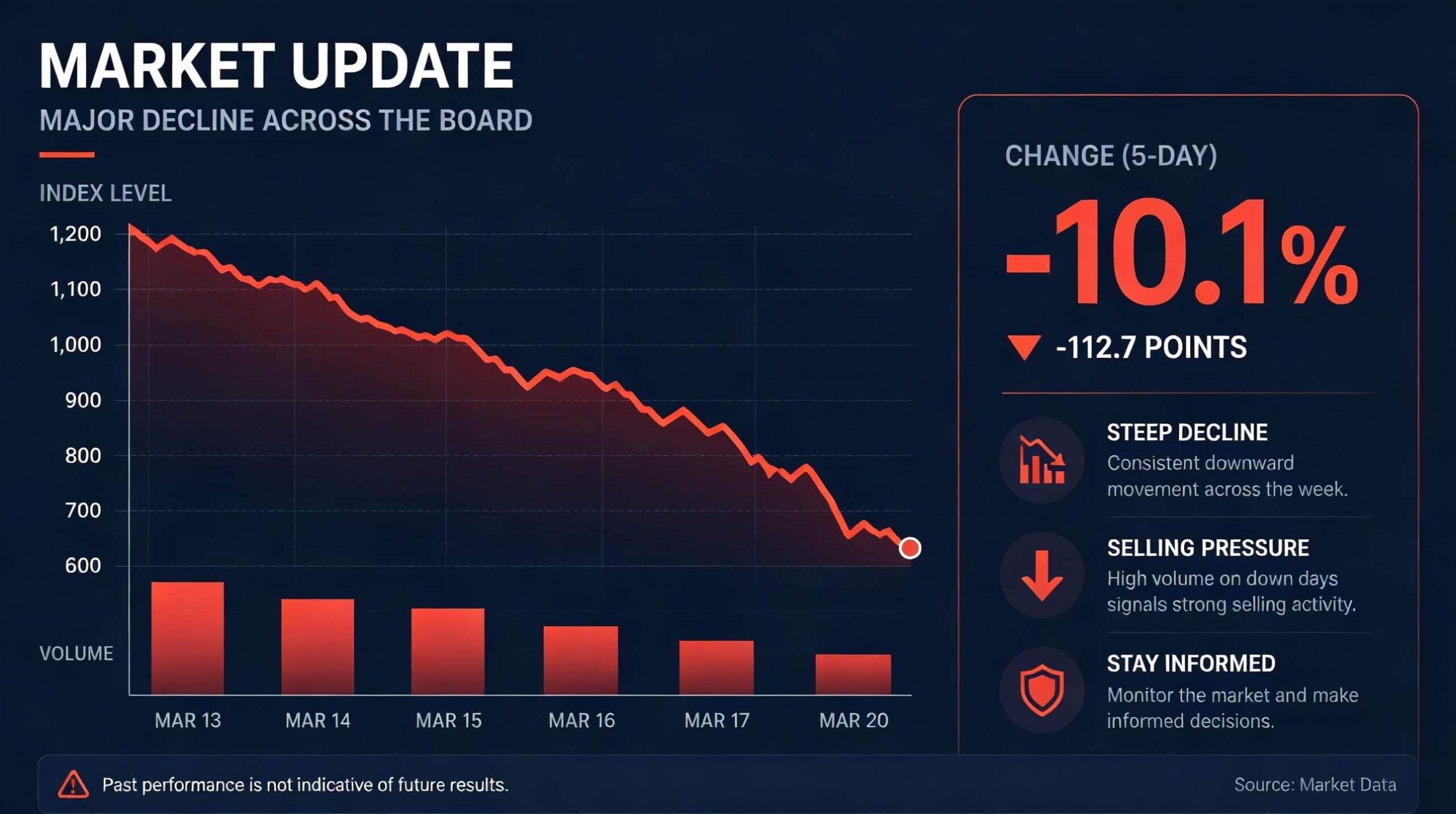
Mutual Fund Assets were down a massive 10.1% from Rs 82.03 lakh crs to Rs 73.73 lakh crs in march 2026. This decline was mainly due to a fall in the equity markets due to the US-Israel-Iran conflict as well as high outflows from debt funds due to year end activities. The Industry witnessed net outflows of Rs 2.39 (0.94) lakh crs mainly due to outflows of 2.94 lakh crs from debt schemes. Hybrid schemes also saw net outflows of 0.16 (0.12) lakh crs. Arbitrage funds saw outflows again mainly due to the year end as well as taking advantage of the decline in equity indices. However, there were net folio additions of 33.63 lakhs leading to total folios of 27.39 crs, an increase of 1.24% over the previous month.
The Nifty 50 declined by 11.3% during the month. The Nifty 500 was down a similar 11.36% whereas even the mid and small caps were not spared. They were down 11.06% and 10.02% respectively.
The Nifty 500 has returned 11.88%, Nifty midcap 150 – 17.5% and Nifty smallcap 250 – 16.34% over the last five years.
Equity mutual fund schemes:
Equity assets declined to Rs 31.97 (35.39) lakh crs. However, inflows were much higher at Rs 0.40 (0.26) lakh crs. These were the highest numbers in the last six months. Did year end pressures lead to this spike? We will come to know next month. SIP numbers also increased to Rs 0.32 (0.29) lakh crossing 32,000 crs for the first time. Flexi cap schemes had the highest inflows followed by small and midcap schemes. ELSS schemes and Dividend yield schemes saw net outflows. The net inflows in the major categories were as under:
– Flexi cap schemes: Rs 10,054 (6,925) crs
– Small cap schemes: Rs 6,264 (3,881) crs
– Mid cap schemes: Rs 6,064 (4,003) crs
– Large & mid cap schemes: Rs 5,307 (3,138) crs
– Sectoral/Thematic schemes: Rs 2,699 (2,987) crs
Debt mutual fund schemes:
Debt scheme assets declined by 15% to Rs 16.52 lakh crs from Rs 19.44 lakh crs. Yields on 10 year government securities crossed 7% after Jan 2025. The rupee also depreciated against the USD and along with year end balance sheet adjustments led to the massive outflows from debt schemes. Liquid and overnight schemes saw the most outflows followed by money market and short duration schemes.
Hybrid Mutual Fund Schemes:
Hybrid fund assets declined 7% from Rs 11.13 lakh crs to Rs 10.35 lakh crs. This was caused due to mark to market losses as well as outflows. Arbitrage funds saw outflows of 21,114 (592) crs and so did other categories such as Balanced advantage funds, equity savings and conservative hybrid funds. Multi Asset funds saw inflows of Rs 5,213 (8,476) crs. The highest inflows were in January at 10,485 crs. Aggressive hybrid funds also saw net inflows of Rs 995 crs (1,419).
Passive Funds:
AUM of passive funds fell 7.3% to 14.12 lakh crs from Rs 15.24 lakh crs. This was also due to market decline. Inflows in these schemes doubled to Rs 30,768 crs from Rs 13,879 crs in February. Index ETFs saw a very high inflow of Rs 19,802 crs compared to Rs 4,487 in the previous month. The highest flows were in Jan at 15,000 crs. Index Funds also saw very high inflows of Rs 8,169 crs which were the highest inflows in the last few months. The highest being 3,233 crs last month and the other months seeing inflows of less than 2,000 crs. Gold ETFs also saw a moderation in flows to Rs 2,266 crs from the highs of Rs 24,040 crs seen in Jan 2026. Silver ETFs saw outflows of Rs 684 crs compared to outflows of Rs 826 crs in Feb. Jan had seen massive inflows of Rs 9,463 crs.
Specialised Investment Funds (SIFs):
SIFs saw inflows of Rs 1,314 crs and its assets were Rs 10,620 crs. Hybrid strategies have almost 80% of the assets. Inflows were also the highest in these strategies. It will be interesting to see the progress of this category over the next few years. Clients should allocate 5-10% of their equity allocation to equity SIFs. These may have the potential to give as good if not better returns than pure equity funds.
Way forward:
There is very high uncertainty regarding global economic growth going forward. The war is likely to lead to higher costs for businesses and customers for many years leading to slower growth for all. As a result, revenues and profits of listed companies will slow down impacting their valuations and impacting return on equities for investors. Investors need to take a long term view for investing in equities as markets may be flat for some time. They could be well advised to allocate more to fixed income investments and allocate to equities over the next 12-15 months. Investors should stop chasing returns. Highest inflows were seen in Gold and Silver ETFs in Jan 2026 and now the flows have dropped a lot. Sticking to a planned asset allocation is the best way to get above average returns over a long period of time.
About EquiZen
EquiZen, a registered mutual fund (Sanjay Parikh – ARN-272487) and PMS distributor (APRN-00158), offering personalised financial solutions with a focus on safety and transparency. We aim to assist you to achieve financial freedom, the freedom to do what you want and achieve your dreams. We do not push financial products but believe in utilising them judiciously to meet your needs. Learn more at www.equizen.in or contact us via +91 9820605203 or sanjay@equizen.in.